



Jira is a project management and issue tracking platform built for engineering and development teams — not a CRM. Atlassian offers Sales Pipeline and Lead Tracking templates in Jira, but Jira is not designed to manage customer relationships, pipeline forecasting, or revenue data. Salesforce is the CRM where account managers track deals, contacts, and opportunities. When both platforms are in use, the gap between deal commitments in Salesforce and delivery work in Jira is where customer promises get lost. Knit's Jira-Salesforce integration bridges this gap — syncing Salesforce cases to Jira as issues, linking closed opportunities to Jira projects, and returning status updates to Salesforce automatically.


Automate your Jira – Salesforce Issue and Case Sync
Sync Jira issues and Salesforce cases automatically — sales visibility into engineering work, no manual ticket creation, and deal commitments tracked without leaving either platform.
Try:
Trusted by teams already building on Knit· 4.9/5 on G2·
 Google for Startups Accelerator
4.9/5 on G2·Google for Startups Accelerator












Keep you Engineering and Sales Teams in Sync Always
When engineering works in Jira and sales works in Salesforce, deal commitments and customer issues fall through the gap. Knit keeps both in sync — automatically.
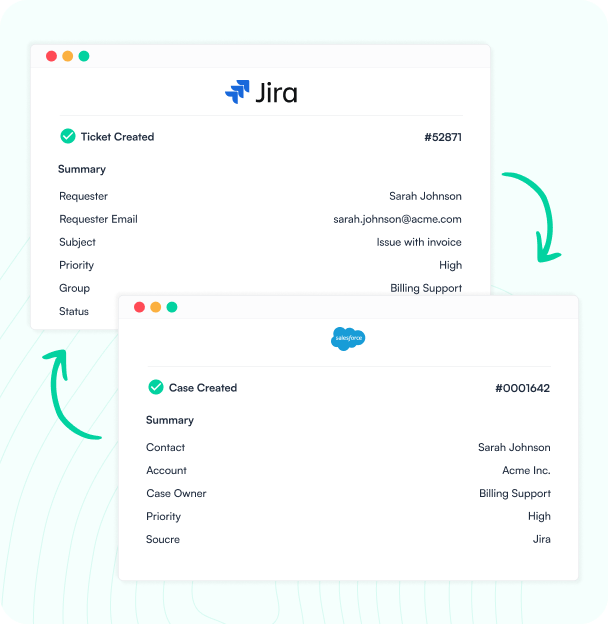
Case & Issue Sync
Salesforce cases sync to Jira as issues — engineering sees customer problems in their backlog without leaving Jira.
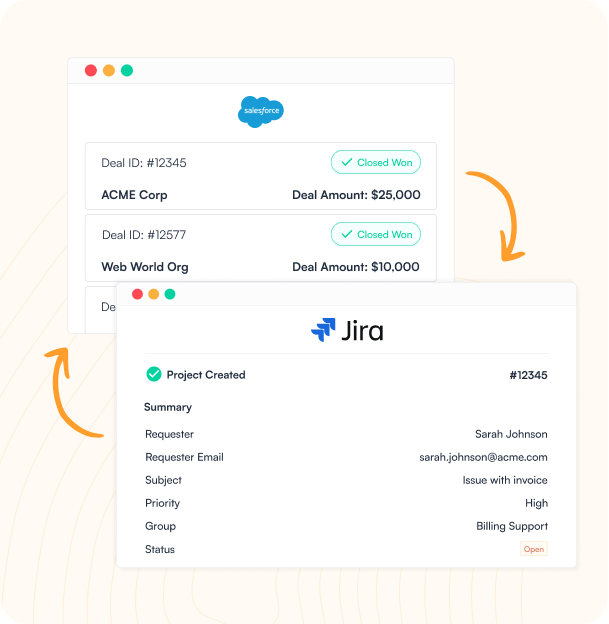
Opportunity & Project Linking
Closed Salesforce opportunities link to Jira projects — feature commitments and delivery milestones tracked against the right deal.
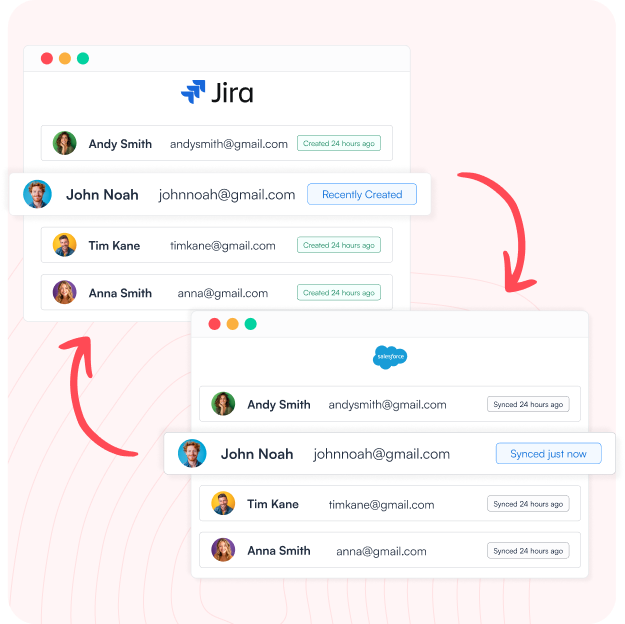
Status & Field Sync
Jira issue status, priority, and comments sync back to Salesforce — sales sees progress without chasing engineering for updates.
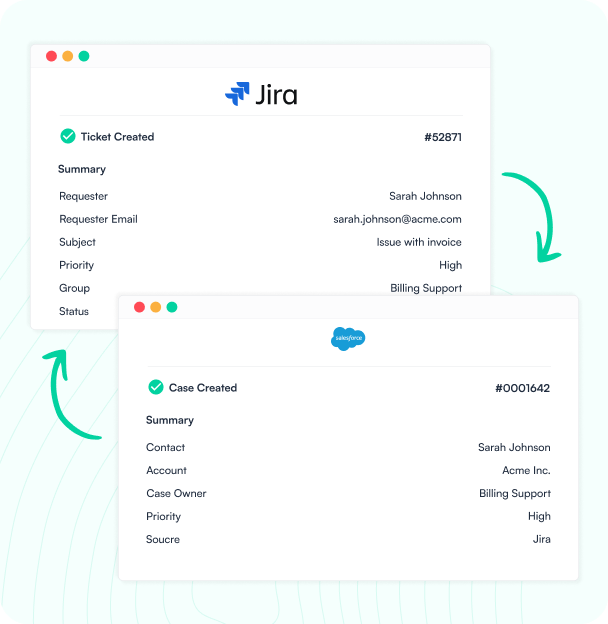
Bug & Escalation Visibility
Critical Jira bugs linked to Salesforce accounts surface for account managers — no more surprise escalations on renewal calls.
Salesforce & Jira - In Sync Always
Knit connects Jira and Salesforce across cases, issues, opportunities, and projects — with custom field mapping and no MuleSoft required.
Case & Issue Sync
Salesforce cases sync to Jira as issues automatically — customer problems land in the engineering backlog without manual ticket creation.
Opportunity & Project Linking
Closed Salesforce opportunities link to Jira projects automatically — feature commitments and delivery milestones tracked against the right deal.
Status & Field Sync
Jira issue status and priority sync back to Salesforce automatically — sales sees engineering progress without chasing for updates.
Bug & Escalation Visibility
Critical Jira bugs linked to Salesforce accounts surface for account managers — no surprise escalations on renewal or QBR calls.
How it works
From Setup to Live in Minutes
No MuleSoft, no Apex code, no Atlassian admin projects. Connect Jira and Salesforce through Knit's no-code workflow builder in one session.

Connect Your Apps
Authorize Jira and Salesforce through Knit's secure connections — no API keys to manage, no credentials stored on our servers.

Map Your Objects
Map Salesforce cases and opportunities to Jira issues and projects using Knit's visual mapper. Custom fields included. No code required.

Go Live
Activate the sync. Data flows bidirectionally between Jira and Salesforce — in real time, on a schedule, or on trigger.

Knit Handles the Rest
Knit monitors every sync, alerts you to mapping gaps, and handles API changes from either platform automatically.
#1 in Ease of Integrations

4.9 out of 5 stars on G2




Frequently Asked Questions
Does Jira have a CRM tool?
Can Jira be integrated with Salesforce?
Yes. Knit provides a no-code bidirectional integration between Jira and Salesforce that syncs cases and issues, links opportunities to projects, and returns Jira status and field updates to Salesforce automatically — in real time or on a schedule. No MuleSoft, no Apex development, and no Atlassian Marketplace connector admin setup required.
How do you sync Jira issues with Salesforce?
With Knit, you connect Jira and Salesforce via secure OAuth, configure your object mapping (Salesforce cases to Jira issues, Salesforce opportunities to Jira projects, with custom field mapping for priority, status, and assignee), and activate the bidirectional sync. From that point, new Salesforce cases automatically create Jira issues, Jira issue status and comments sync back to Salesforce, and deal-linked bugs or feature requests surface for account managers — without anyone manually creating tickets or chasing engineering for updates.
What data syncs between Jira and Salesforce?
The most common data objects synced between Jira and Salesforce include: cases and issues (Salesforce cases synced to Jira as issues, with status, priority, and description), opportunities and projects (closed Salesforce opportunities linked to Jira projects for delivery tracking), issue status and comments (Jira updates syncing back to Salesforce so sales has visibility without leaving the CRM), contacts and accounts (customer data kept consistent between both platforms), and custom fields (any standard or custom field in either system, mapped via Knit's visual mapper).
Related Workflows


Zendesk – Slack New Ticket Alerts
Get instant Slack alerts for every new Zendesk ticket, priority escalation, and SLA breach — support teams respond faster without watching the…
Zendesk – Salesforce Support and CRM Sync
Sync Zendesk support tickets and Salesforce customer data automatically — full context visible to both teams, with custom field mapping the native…


ADP – QuickBooks Payroll Sync
Sync ADP payroll to QuickBooks automatically — journal entries posted, GL accounts updated, and payroll data landed in the right accounts the…